
Originally published on Nov 13, 2024. Fully updated on Sep 02, 2026.
The best HR tool in 2026 for small businesses is TalentHR, which handles all-around HR use and sets up in a few clicks. The rest of the shortlist is split by job. Zoho People covers low-cost HR admin. Gusto runs US payroll. Homebase suits hourly teams. Deel manages global contractor and employer-of-record work. Frappe HR serves teams that want open source. All 11 HR tools for small businesses below carry a July 2026 price check, and every vendor links to its own pricing page.
This list is for small business owners, founders, ops managers, office managers, and first HR hires at companies with under 50 employees. They need to run HR without a full HR department.
Summary: The Best HR Tools for Small Business at a Glance
How We Evaluated These Tools
Nine factors were used to make the list, and the most important one was affordability.
- Affordability. A small company needs to be able to pay for the tool now and figure out how much it will cost based on its growth plans over the following years so that it doesn't ever have to carry out a migration later.
- No vendor lock-in. Some tools cost little at first, then the plan turns expensive and leaving costs so much that a company stays out of inertia. That pressure disqualifies a tool.
- Transparent pricing. The price table belongs on the page, and it's readable without a sales call.
- A free plan or free trial. A free plan lets a team start at zero. A free trial lets it test an advanced feature before paying.
- Ease of setup. Nobody should pull a founder-grade engineer off work that matters to install HR software.
- Core HR features. Employee records, onboarding, and time off form the base. A tool without them fails as small business HR software.
- Automation. A new hire should trigger the onboarding flow and fire the alert that, for example, allows IT to get a laptop ready.
- AI usefulness and transparency. Slapping an AI sticker on a product is fashionable, and plenty of software products run a chatbot with a thin context window behind the label and call it "AI." What matters is a vendor that states exactly what its AI does and charges no premium for a feature a small team will never use.
- Integrations. The tool should reach an existing payroll provider and an existing stack, such as Slack, through a documented API or a validated Zapier connection.
What HR Tools Do Small Businesses Need?
Seven jobs cover almost everything a company under 50 people has to handle, and a tool earns its place by doing one of them well.
- Employee records. A profile per person, secure, and complete enough to pull metrics from as people join and leave.
- Onboarding and paperwork. Someone joins and finds everything ordered and up to date. Most teams want to automate HR paperwork before anything else.
- Time off. Self-serve requests give employees agency over their own days and remove a whole class of miscommunication.
- Hiring. Post a role, and let the tool draft the job description. A founder has no reason to know how one is written.
- Performance. Track the whole film of someone's time at the company. Snapshots by themselves don't make for a good evaluation. (You need to see "the whole picture.")
- Contractor management. Onboard contractors alongside employees, which matters when a company hires people abroad on W-8 terms.
- Compliance reminders. Keep documents current, with a clear digital audit trail for the day someone requests to see the papers.
Top 11 Budget-Friendly HR Tools for Small Businesses
Each pick below answers a different need, and the order runs from the broadest fit to the most specialized.
1. TalentHR: best all-in-one HR tool for small businesses on a budget
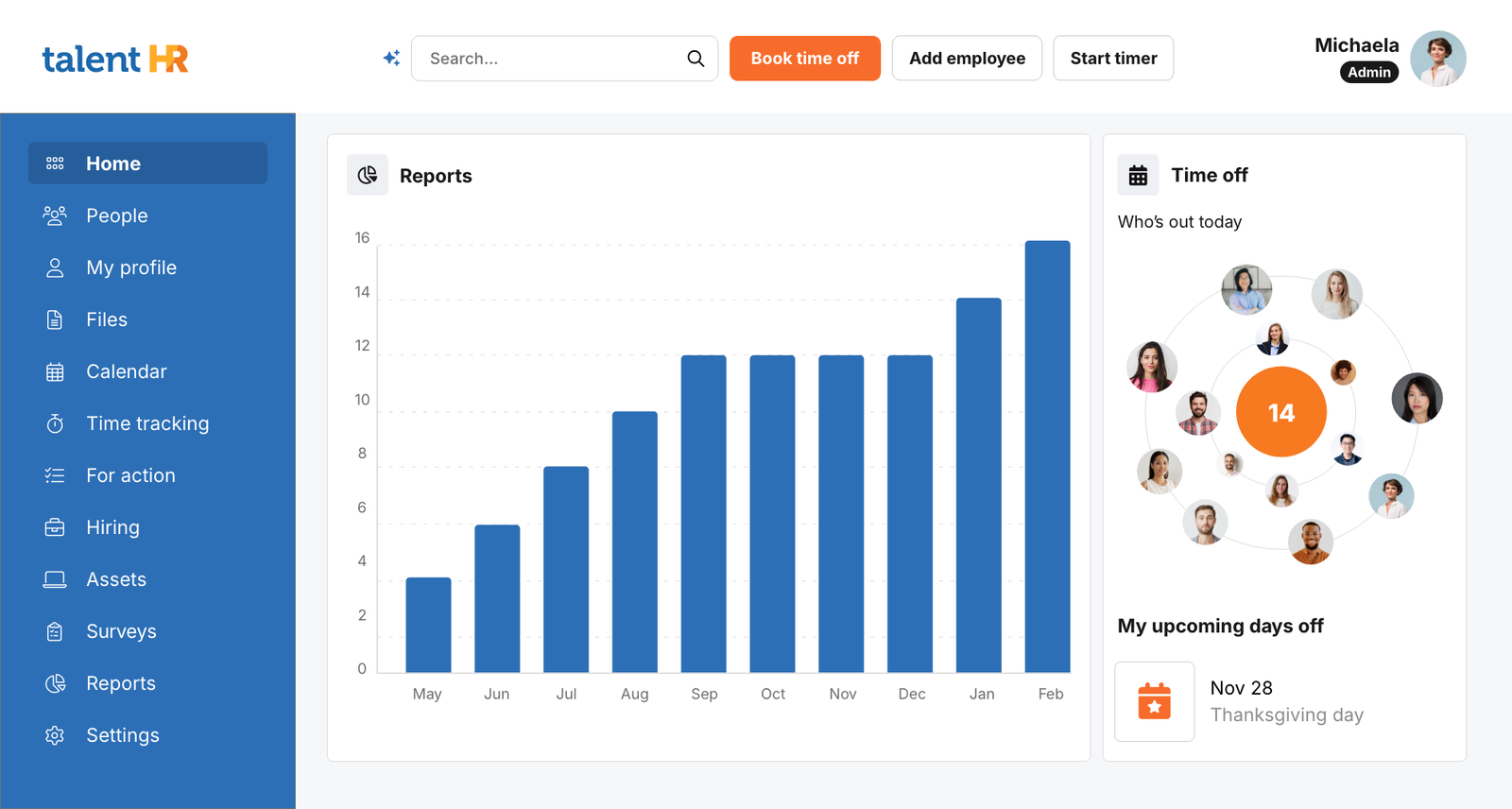
TalentHR covers the full employee lifecycle in one place: employee records and files, onboarding and offboarding, hiring (it has a native ATS), performance, and basic reporting. It runs as SaaS, so a team starts in two clicks with no server to set up and no IT staff to hire. The pricing is public. A free plan covers up to 10 users with no time limit. Essential runs $2 per user per month, Premium $4. Paid plans start at 15 users.
Two things make it the lead pick for a small company. The cost is knowable in advance, so a founder can calculate what the tool costs today and what it will cost at double the headcount. And it integrates with what a company already runs, through a documented API and validated Zapier connections. A team happy with its payroll provider can keep it and still centralize people operations. Employee benefits sit alongside the rest, covered in our guide to small business employee benefits.
2. Zoho People: best low-cost HR admin tool
Zoho People handles basic HR records, time off, and workflows at a low price. The vendor has been around for a long time and covers a wide catalog of products. The free plan covers up to 5 users with no time limit, paid tiers start at around $1.50 per user per month, and a 30-day trial needs no credit card. It makes the most sense for a company already inside the Zoho ecosystem. For a small team on its own, it feels less purpose-built than a tool designed around small business HR software from the start.
3. Gusto: best for US payroll
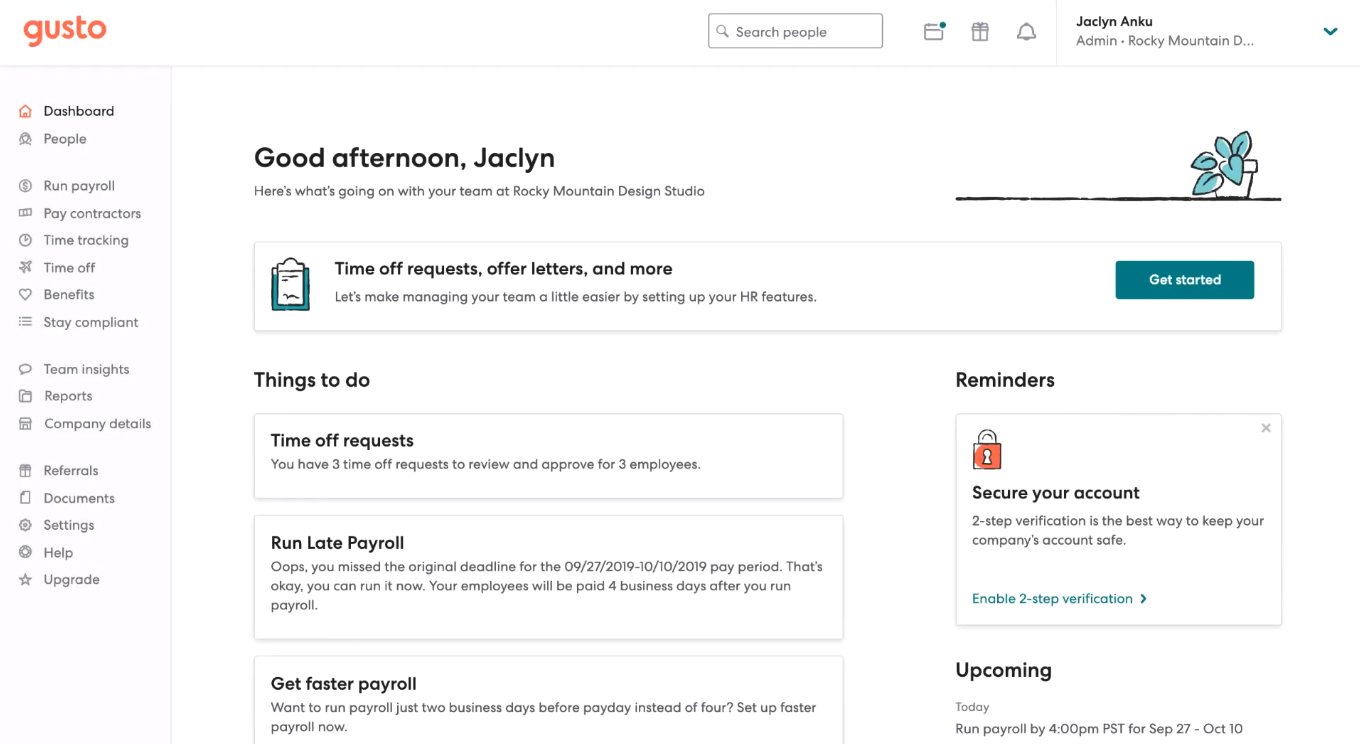
Gusto runs full-service payroll inside the United States, with tax filing, benefits administration, and payments to contractors. The Simple plan costs $49 per month plus $6 per person per month, and a contractor-only plan runs $35 per month plus $6 per contractor. It ranks among the most recommended payroll tools available. It stays a payroll product instead of an all-around HRIS, and the jurisdiction covers the US only, so a company with people outside the States needs something else for them.
4. Homebase: best for hourly and shift-based teams
Homebase builds around scheduling, time tracking, shift swaps, and team messaging, with payroll as an add-on. The Basic plan is free for one location and up to 10 employees. Essentials runs $30 per month per location, Plus $70, and All-in-One $120, with roughly 20% off annual billing. Restaurants, retail, and local service businesses fit it best, since the whole product assumes a job timetable instead of a desk workforce.
5. Deel: best for global contractors and EOR
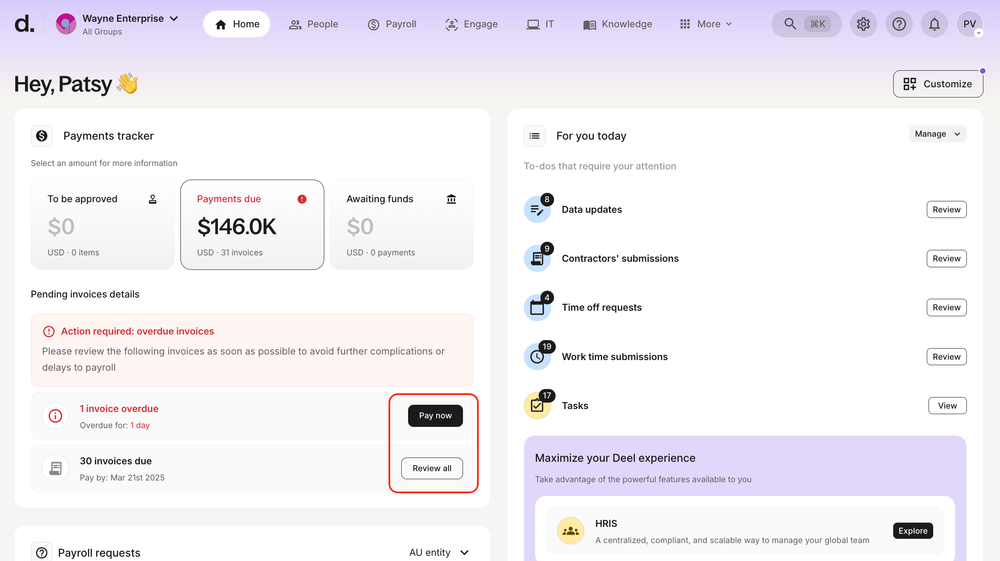
Three terms get mixed together here, and they are separate things. Payroll pays people who are already employed by the company. Contractor management handles the paperwork and payments for non-employees. An employer of record legally employs someone on the company's behalf in a country where the company has no legal entity, and it assumes compliance and liability.
Deel does all three across dozens of countries. with contractor management from $49 per contractor per month and EOR from $599 per employee per month. It earns its place when a company hires outside its home country. A local ten-person team has no pressing need for it, though.
6. BambooHR: the best-established HRIS for growing small businesses
BambooHR is mature, well-known, and heavier than the lightweight options. Its long run in the market brought, perhaps, too many features, the way Notion's did, and smaller companies can struggle to know where to begin. Core runs $10 per employee per month, Pro $17, and Elite $25, with a flat rate of $250 per month for teams of 25 or fewer. The published tiers still point a buyer toward a sales conversation for a real quote, so the final number stays less certain than the page suggests.
7. Rippling: best for HR plus IT automation
Rippling joins HR, payroll, app access, and device management in one modular platform, so payroll can sit next to laptop provisioning. That suits a tech-forward small business, and it sometimes competes with employer of record providers. Rippling publishes no prices and quotes each setup through sales. For a small or non-technical team, it is more platform than the work requires.
8. Connecteam: best mobile-first tool for deskless teams
Deskless workers make up roughly 80% of the global workforce, and most HR software still assumes someone sitting at a computer. Drivers, cleaners, delivery staff, and field crews need an interface built for a phone. Connecteam delivers that with a mobile app, a shift schedule, a time clock, chat, forms, and checklists. The Small Business Plan stays free forever for up to 10 users with every feature included, and paid tiers start at $29 per month for the first 30 users. It's appropriate for businesses that clean and deliver things, work shifts, and have a lot of employees coming and going.
9. Breathe HR: best for UK small businesses
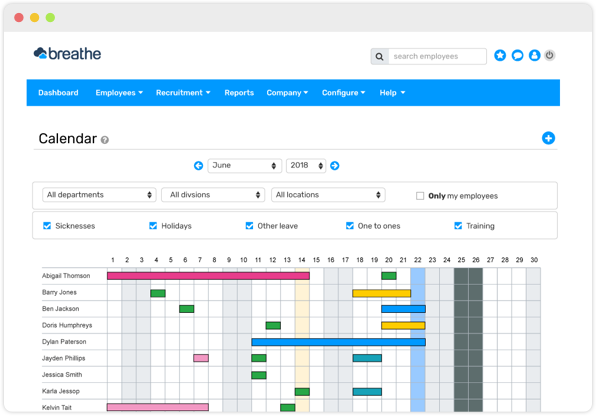
Breathe HR prices by headcount band instead of per user. It costs £24 per month for 1 to 10 staff, £44 for 11 to 20, £99 for 21 to 50, and £175 for 51 to 100. A 14-day trial comes with every plan, and annual billing takes off roughly 15%. Absence tracking, features for storing documents, and performance come in every tier. UK vendors like this one and BrightHR build around UK compliance and UK GDPR, which makes them a sound starting point for a UK-only headcount. A company with international plans on the horizon wants something that also covers EU rules and markets, such as the United States and Canada. BrightHR is the main alternative, and its contracts run 24 to 60 months, which weighs against the lock-in criteria described above.
10. Frappe HR: best open-source HR software
Frappe HR is free and open source under the GPL-3.0 license, and the project on GitHub is actively maintained. Open source and free are separate ideas, and the distinction matters here. The license costs nothing, and the company still has to rent a computer and keep the software running on it. Frappe Cloud starts at $5 a month for managed hosting, and a self-managed virtual private server starts below $10.
The underlying objection is about who carries the risk. A small company already runs plenty of overhead, and a self-managed server adds security holes to watch, the chance of an attack, and the risk of exposing private employee data. From what we can gather, Frappe itself is a very good product. If the infrastructure falls over at the worst moment, the cause lies with a third party instead of with Frappe or the company. But for the small business, it'll be the same outcome: They might not be able to use their tool.
11. Justworks: best for payroll plus HR support
Justworks bundles payroll, benefits, compliance support, and HR services for $79 per employee per month on its PEO Basic plan. RUN Powered by ADP covers similar ground with a much stronger brand and a pricing based on... requesting a quote. Either one is good for a small business that has a lot of employees and needs human resources support. Neither is the first pick for a small company whose main need is employee records and time off.
What Changed for Small-Business HR Tools in 2026?
Four shifts are significant for a company shopping this year.
AI is everywhere, and most of it is a marketing claim. A small business needs AI that produces a result, such as drafting a job description and getting the ad posted. Promises beyond that tend to burn token credits without changing the work.
AI hiring rules now carry real obligations. New York City's Local Law 144 requires an annual bias audit of any automated employment decision tool. The company has to publish the results and give candidates at least 10 business days of notice. Illinois has required consent and disclosure for AI video interviews since 2020 and now collects demographic reporting too. Colorado replaced its broader AI Act with a narrower automated-decision law in May 2026, effective January 2027. What they all have in common is that a person makes the choice, and the business can prove it.
Contractor and global hiring became normal for small teams. Plenty of companies have full-time people on a company email address, but strictly, they're contractors living abroad. Software has to treat that as its own hiring category, with payment and paperwork to match.
Spreadsheets break earlier than they used to. Owners tell us that spreadsheet communication breaks down at around 15 to 25 employees, especially when people start requesting vacation days. That number still holds, and compliance now arrives sooner. A company with staff in New York, Illinois, and California tracks several sets of rules at once, and the spreadsheet might fall short.
How to Choose the Right HR Tool for Your Small Business
The decision comes down to the job in front of the company.
- One place for employee records, onboarding, and paperwork? Choose TalentHR. It covers the lifecycle, costs little, prices in public, and starts in a few clicks.
- US payroll? Choose Gusto, or any HR solution that integrates with payroll providers.
- Hourly scheduling for people away from a desk? Choose Homebase or Connecteam.
- Global contractors? Choose Deel, and expect to add something separate for posting roles and recruiting.
- HR and IT workflows together? Choose Rippling.
- Open source? Choose Frappe HR, and plan to own the infrastructure.
Start With a Low-Cost HR System That Communicates Its Price
A small team can read the whole cost of TalentHR up front and start free for up to 10 users. No wait for a sales rep to return a quote. That is the difference between affordable HR software and software that might be affordable once someone tells you the price.
Create a free TalentHR account and centralize people operations today.
Frequently Asked Questions
What are the best HR tools for small businesses on a budget?
TalentHR leads for all-around HR at $2 per user per month, with a free plan for up to 10 users. Zoho People covers low-cost admin, Gusto handles US payroll, Deel manages global contractors, and Frappe HR is free to self-host for technical teams.
Which HR systems for small companies support under 50 employees for under $200 a month?
For a company with fewer than 50 employees, there are several HR systems that come in under $200 a month. Based on pricing, for a 40-person team, TalentHR costs around $80/month on the Essential plan, while Zoho People is about $60/month. Connecteam starts at $49/month on its Advanced plan, Homebase is around $70/month per location, and Breathe HR costs £99/month.
Can a small business use HR software without an HR manager?
Yes. The best simple HR software for small teams is built for owners, founders, office managers, and ops leads. TalentHR needs no HR background and no IT team, which is the point of a budget-friendly HR tool at this size.
 Hiring shouldn’t live in a spreadsheet.